
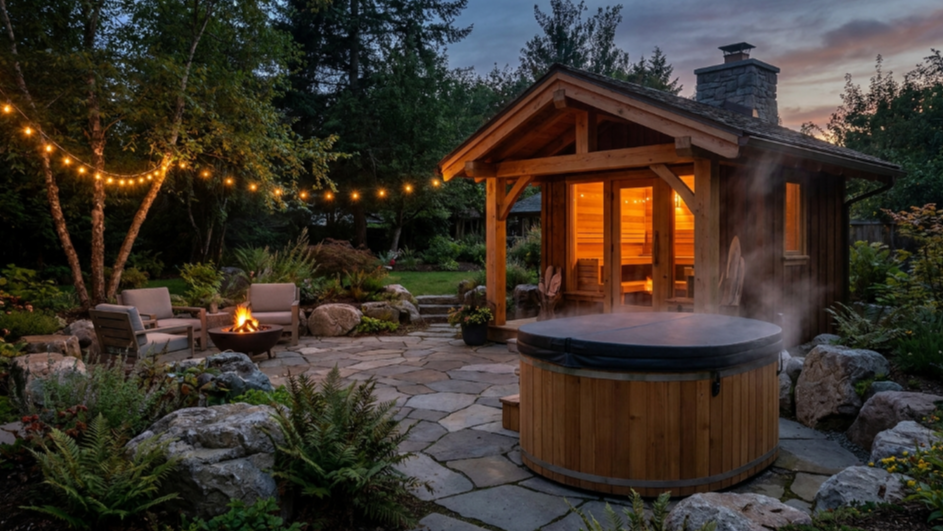
The purchase decisions that matter most when buying a sauna are heater output matched to cubic footage, wood species and panel construction, the electrical work a unit requires, total installed cost rather than sticker price, and warranty length on the heater itself. A small indoor infrared cabin starts around $2,000, while an outdoor cedar barrel sauna with a proper heater and basic electrical work typically lands between $4,500 and $9,000. Buyers who skip these checks tend to end up with a cabin that never quite holds temperature or a heater that fails inside three years.
Should You Buy Traditional Heat or Infrared?
Every sauna on the market falls into one of two categories. A traditional sauna heats the air, usually to 150 to 195 degrees Fahrenheit, using an electric or wood-fired heater, with steam available by pouring water over the rocks. An infrared cabin warms the body directly at a lower ambient temperature, generally 120 to 150 degrees, and needs less electrical capacity to run. Neither one is the correct answer for everyone. Traditional heat delivers the sharper, more intense session that longtime sauna users expect, while infrared heats up in under fifteen minutes and often plugs into a standard outlet. Pick the category based on the experience you want three sessions into a normal week, not on which one photographs better in a listing.
How Big a Heater Does the Room Actually Need?
Heater capacity is sold in kilowatts, and the right number tracks cubic footage, not square footage. A cabin with a high ceiling or a lot of glass loses heat faster and needs a larger heater than a low, well-sealed box of the same floor plan. A commonly used starting point for a tight, well-insulated cedar cabin is about one kilowatt per 45 to 60 cubic feet, though every manufacturer publishes its own sizing chart and a reputable one will ask about ceiling height and window area before recommending a model. An undersized heater runs nonstop and still falls short of target temperature, which shortens its working life and drives up the electric bill for a mediocre result.
Which Wood Holds Up Best Inside a Sauna?
Western red cedar and Nordic spruce dominate the market because both resist warping in a wet, cyclically heated box and release very little resin once the cabin gets hot. Heat-treated hemlock is a common lower-cost substitute and performs reasonably well when it has been kiln-dried correctly. Vague listing language like “premium wood” without naming the species is worth treating as a warning sign, since a legitimate builder states both the wood and its drying process. Panel joinery matters as much as species: tongue-and-groove construction with no exposed metal fasteners on the interior is standard for a reason, because exposed screws heat up fast and gaps between poorly fitted boards leak warmth and shorten the heater’s working life.
What Does a Sauna Actually Cost Once Installation Is Included?
Sticker prices rarely tell the full story. A two-person infrared cabin might list for $2,500, but a traditional outdoor barrel sauna needs a heater, wiring, and often a pad or foundation before it is usable, which pushes the real cost closer to $6,000 to $9,000 for a mid-size unit from a name brand. Specialty retailers including Redwood Outdoors, Almost Heaven, and SweatDecks saunas list model-by-model pricing that is worth comparing line by line, particularly against any barrel sauna advertised at a price that looks too low for its claimed cedar thickness and heater wattage. A cheap unit with a vague heater spec is the most common way buyers end up replacing a sauna within a few years instead of getting the decade-plus lifespan a well-built cabin should provide.
What Electrical Work Should a Buyer Plan For?
This is the line item that surprises the most first-time buyers. Most residential sauna heaters above 6 kilowatts require a dedicated 240-volt circuit, and plenty of homes do not have spare capacity in the panel for one without an upgrade. Before ordering, it is worth having an electrician confirm what a dedicated run will cost, because that number swings widely depending on distance from the panel and whether the panel itself needs work. Outdoor units add a pad or foundation requirement and, depending on local code, a disconnect switch within sight of the heater. None of this shows up on the sauna’s price tag, so budgeting installation as its own line item, priced before ordering rather than after the unit arrives, avoids an unpleasant surprise.
What Does the Research Say About Regular Sauna Use?
Sauna marketing leans hard on health claims, and some of it holds up, though the underlying research is narrower than most ads suggest. A large Finnish cohort study found that men who used a sauna four to seven times a week had lower rates of fatal cardiovascular events and all-cause mortality compared with men who used one once a week, an association that persisted after adjusting for other risk factors. A 2018 review in Mayo Clinic Proceedings summarized similar cardiovascular associations across multiple studies, alongside reported effects on vascular function. A separate systematic review in Evidence-Based Complementary and Alternative Medicine reached comparable conclusions about regular dry sauna use. These are population-level associations built mostly on Finnish cohorts, not proof that a sauna prevents disease in any one person, and anyone managing a heart or blood pressure condition should treat the research as a reason to ask specific questions before buying rather than a guarantee of a health outcome.
Frequently Asked Questions
How much does a home sauna cost installed? A small indoor infrared cabin starts around $2,000 to $3,500 for the unit alone. A traditional outdoor barrel or cabin sauna from an established maker typically runs $4,500 to $9,000 once you add a heater, delivery, and basic electrical work. Custom builds and larger multi-person cabins go higher.
What size heater does a two-person sauna need? A well-insulated two-person cabin usually needs roughly 4.5 to 6 kilowatts, depending on ceiling height and glass area. Sizing should be based on cubic footage, not floor space.
Is infrared or traditional heat better for a first sauna? Neither is objectively better. Infrared heats faster and often runs on a standard household circuit; traditional saunas run hotter, offer steam, and typically need a dedicated 240-volt circuit. Choose based on the sensation wanted, not price alone.
How long should a sauna heater warranty last? Look for at least two years on the heater itself, with five or more years common among established brands. A shorter or unstated warranty is a common sign of a lower-quality import unit.
References
- Association between sauna bathing and fatal cardiovascular and all-cause mortality events, JAMA Internal Medicine, 2015
- Cardiovascular and Other Health Benefits of Sauna Bathing: A Review of the Evidence, Mayo Clinic Proceedings, 2018
- Clinical Effects of Regular Dry Sauna Bathing: A Systematic Review, Evidence-Based Complementary and Alternative Medicine, 2018
By Derek Mahoney
